Understanding Penetration Testing Scopes

“Can I have a penetration test please” is about in line with saying “Can I have a car please?”. Why am I writing a blog about this? Well, where do I start, so I have been working on the technology world basically all my career and over the last 20 odd years one area of digital security management that I think a lot of organisations and people struggle with is understanding just what a penetration test is, how it should be used, how long they can take and what is involved. Read more “Understanding Penetration Testing Scopes”

Extortion and Ransomware – A lethal Combination

A Brief History of Ransomware

Ransomware is not that new, I remember back during the msblaster incident I said to a friend, it is a good job whoever wrote this worm was not evil because they would have simply encrypted or deleted all the data post infection. Hell, I can barely remember when that was, I think it was late 2003. Ransomware has been around since the 1980s but not quite in its modern form (it started with the AIDS malware scam). Fast forward to the mid 2000’s and criminals were using encryption but that wasn’t a norm and things only really started to take a bad turn around 2012/2013 with Cryptolocker. The next major global events were WannaCry, NotPetya and Badrabbit. Read more “Extortion and Ransomware – A lethal Combination”

Vulnerability Management Realities

Trust but verify

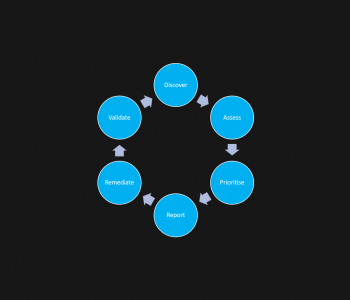
Someone tells you they have fixed something, now go and check! You might find that it is not actually fixed, or that the ‘fix’ made the issue worse (or makes new vulnerabilities appear). You might however also find that the vuln is gone.

Wow so many options, but the reality is with this space is that you have to keep checking, you also need to validate.

Validation is key, people do not say that think it is fixed because they have not done something, we all have scenarios where we make a change, assume it works and then find out later that maybe a bit more testing would have helped (I have this too!). Read more “Vulnerability Management Realities”

Snake Oil Defence: Defending against lies and false claims

Defenders of the Realm

We often talk about not selling using fear, uncertainty, and doubt (FUD). It is quite a big thing in the cyber security industry where the entire purpose of existence is to help people and organisations manage risk to prevent, detect and respond to impact to confidentiality, integrity, and availability. A key foundational component is that we operate using science, trust, and integrity.

This does however become quite interesting when you look at some rather dubious sales and marketing techniques employed by a few.

What I have noticed are there are a range of patterns that are similar (it is like they all went on the same con artist course!) so I thought I would look at some of the indicators I see which bring up flags to me. Read more “Snake Oil Defence: Defending against lies and false claims”

Image

The case for hacking back

Weapons Free

Cyber warfare, it may sound like something out of a fictional book or science fiction film but in the modern digital age it is a reality. 24 hours a day around the world there are information wars occurring ranging from civilian domestic style events through to military operated campaigns. Read more “The case for hacking back”

logging

Incident Response – Web Logs

Knowing where to look is a real important piece of the incident response puzzle. With a large number of incidents involving web servers, I figured it was a good idea to talk about some of the common log files, their locations and some gotchas. We are going to dive into some tech 101 then follow up with how this ties into the Incident Response process (so hopefully this helps if you re more PowerPoint than Bash).

Why do we care about where the default paths are? Well hopefully if you have planned ahead and got a security monitoring solution you won’t have to. But all things start from acorns. A good way to start to understand how logs and incident response tie together are to understand what is needed under the hood. This isn’t a deep dive but more a glimpse. When we visit a web page the webserver should be configured to capture the access logs. These logs are really helpful in an incident involving web services, so where can we find them?

Read more “Incident Response – Web Logs”

Building a security culture on a foundation of concrete…

In this post I go on a winding road of exploration around some of the challenges I find with organisations when it comes to the realities of secure technology management, some of the barriers I see and the stark truth that technology security challenges are not a two-minute fix. Be warned this is an exploration of thought so it’s a bit random in it’s path but hopefully it shares some of my insights and thoughts from over the years. Read more “Building a security culture on a foundation of concrete not sand – ramblings of a consultant”

In this post I go on a winding road of exploration around some of the challenges I find with organisations when it comes to the realities of secure technology management, some of the barriers I see and the stark truth that technology security challenges are not a two-minute fix. Be warned this is an exploration of thought so it’s a bit random in it’s path but hopefully it shares some of my insights and thoughts from over the years. Read more “Building a security culture on a foundation of concrete not sand – ramblings of a consultant”

Everything must be agile but is that really always…

A lot of people talk about AGILE but the normally mean ‘agile’ however when it comes to security testing and penetration testing (to me there is most certainly a difference) we need to be mindful of the different approaches, so we select the right one for the context, scenario, and objectives.

In this post we take a brief look at what we recommend for a range of scenarios and we look at the key differences and what some constraints might mean when it comes to approach selection.

Read more “Everything must be agile but is that really always the best way?”
Digital Butterfly

Change Management 101

Managing Change (and releases)

This is an area that I think some might be interested in. I have worked with orgs of all shapes and sizes and one central area I find people struggle with is change management. I am not talking about organisational change management (that is another) but I am talking about the change of information systems or security controls.

Now you might be familiar with ITILv3/2011 and the PROCESS of change management or you might be in the new practise world of ITIL4 where it is called change enablement, or you might have no idea what I am rabbiting on about. That is ok that is why we are here!

The purpose of change management is (according to ITIL) to help minimise the risk of change for IT services.

Read more “Change Management 101”
Hand pointing towards cybery things

Routine Security Governance and Management Activities you should plan…

Security Planning 101

I have been thinking about how organisations manage (or do not manage) their security postures from both a governance and management point of view. To help organisations that are just starting on their security improvement journey I thought I have put together a list of activities they may want to have in a forward schedule document (you could even call it a roadmap). It is not going to be all things to all people and different organisations and markets will have different requirements.

Read more “Routine Security Governance and Management Activities you should plan for”