Leadership

Cyber Security Architecture

I remember (now it was a long time ago) when I worked in a support role and my dream job was being a technical architect, back in the warm and fuzzy days of no host-based firewalls, IPsec being something only MCPs knew about other than the networking team and when cybercrime was a shadow of how it is today.

It wasn’t until I had a few more notches under my belt when I realised that architecture in technology has different viewpoints, not only that but even the industry can’t agree on what things are or are not. That aside the reality is, is that architecture has different domains, specialisms, views, and viewpoints. I often find myself working across a whole range of areas, that is driven largely by specific customer requirements and scenarios (this is why I have a cool lab and lots of kit!)

When we consider a business technology system it has risk and by nature cyber security in that view. To think of this not being the case would be odd because ultimately “business” is the highest abstraction, and let’s think about what makes up a business: Read more “Cyber Security Architecture”

Defense

Exposed VMWARE vCenter Servers around the world (CVE-2021-22005)

There’s a new CVE in town but don’t think it’s the only problem you get when you expose administrative interfaces to the wild west of the internet (yeeha or something). Let’s go on a quick exploration of what the world looks like with the help of our friends at Shodan and then let’s see the ramblings of Dan when looking at how benign enumeration and exploration of services can work. Let’s get started looking at the world, a quick face analysis on Shodan with vmware as a product shows a hit or two, what we are going to focus on is vCenter but you know.. you might want to review your attack surfaces so any exposed services (damn people expose some risky stuff!) Read more “Exposed VMWARE vCenter Servers around the world (CVE-2021-22005)”

Defense

CAF Workbook

Undertsanding the current state of cyber capability maturity across an organisation is no simple feat. The team at NCSC have created a really good set of guidance with CAF. With all things there’s different ways on consuming, understanding and leveraging good practises.

I often find have XLS workbooks incredibly valuable when looking at indicators of good practise inside organisations. With this in mind, I started to put the GAF indicators into a workbook. This isn’t complete yet. It needs refactoring so it can be pivoted etc. It also needs some parts added for metadata capture and analysis.

I’m publishing this because sitting collecting virtual dust is probably the least valuable thing that can occur.

Hopefully this is helpful to people, even in it’s current half baked state. I’ll and complete this at some point!

Read more “CAF Workbook”
A screenshot of a computer Description automatically generated with medium confidence CTF

Installing Kali 2021.3

Hax fun with the Dragon distro

Ok today we are going to look at deploying Kali 2013.3. The install process for this is fairly standard and familiar from previous version but for those new to this world, it seems like a good place to start.

Install Procedure (Virtual Machine)

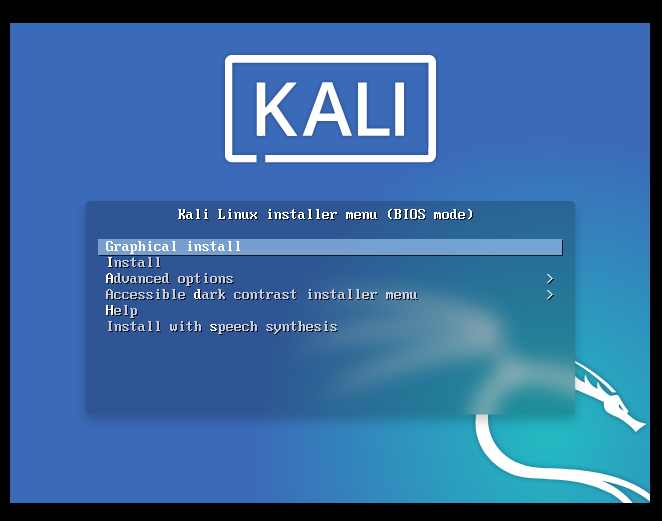
Boot from the ISO

Graphical user interface, application

Description automatically generated Read more “Installing Kali 2021.3”

CTF

How to Identify Hashes

Some hashes are obvious but even then, it’s a good job to check. There are a few ways to check a hash outside of manual validation.

Using the Hashcat example list:

https://hashcat.net/wiki/doku.php?id=example_hashes

Graphical user interface, text, application, email

Description automatically generated

Using hash-identifier:

https://github.com/blackploit/hash-identifier

Using cyberchef Analyse hash:

https://gchq.github.io/CyberChef/#recipe=Analyse_hash()

Background pattern

Description automatically generated with low confidence

Using hash-id:

https://github.com/psypanda/hashID

Using HashTag:

https://github.com/SmeegeSec/HashTag

As you can see there are range of tools available to you, and remember if you want to keep the hashes to yourself you can download Cyberchef and run it locally!

Image Defense

Infection Monkey Overview

Have you ever wanted to see what would occur in an environment if a worm was a make its way in? I often work with customers to show them about lateral movement from a human operated perspective however sometimes it’s useful for people to visualise this better and to demonstrate what could occur if a worm was set loose. A great tool to help with this is Infection Monkey from Guardicore (https://www.guardicore.com/

High Level View

The process steps are as follows:

  • Scope Exercise
  • Prepare Environment
  • Deploy Infection Monkey Server (Monkey Island)
    • Configure Server Credentials
  • Monkey Configuration
  • Release Monkey/s
  • Review
  • Report

Read more “Infection Monkey Overview”

Defense

Windows 11 Privilege Escalation via UAC Bypass (GUI based)

Introduction

Ok these are a really simple UAC bypass from a userland GUI perspective. This is about increasing process integrity levels – it’s not about performing LPE from low integrity to high/SYSTEM with no interaction. These clearly work in older version of Windows as well but since Windows 11 will be the current version in the near future I thought it was fun to re-visit these!

And just to be clear, a medium integrity process as an administrator user will have the following privileges:

Text

Description automatically generated

What we are talking about here is to move to a high integrity process without knowing credentials or having the secure desktop launch. Read more “Windows 11 Privilege Escalation via UAC Bypass (GUI based)”