Guides

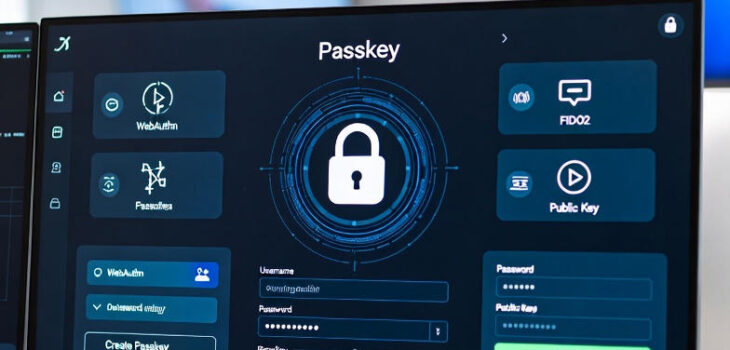
What are passkeys and how do they work?

Phishing, Brute Force, Data Breaches, Info stealers etc. are all ways in which people steal credentials. We’ve had this problem for decades, stealing something or guessing something people know is relatively trivial over the internet. This leads to a huge volume of the breaches we have seen over the last 20+ years. Whilst people seem to understand this, they don’t seem to know how to change to fix this…. (it’s not that we don’t know it’s that change is hard for lots of reasons). So there might be a solution with the adoption of passkeys! So what are passkeys?

Read more “What are passkeys and how do they work?”

Defence

Business Email Compromise: Impact Assessment

If you are are a victim of unauthorised mailbox access and/or attempted fraud via mailbox compromise (BEC) then you know that one of the tasks outside of understanding how the compromise has occurred, what configurations have been tampered with, removing devices and resetting usernames/passwords (and tokens/MFA) etc. is to start to understand the data breach impact.

If someone has logged into a mailbox it’s very very unlikely that zero data has been accessed!

Read more “Business Email Compromise: Impact Assessment”
Guides

Phishing (Cred harvester) Response

Incident Response Playbook (High Level)

Having a plan for how you will respond to common incidents is key. It’s a good idea to have procedural level “playbooks” (we used to just call these procedures, maybe I’m old!) but let’s get taktic00l and call them:

Playbooks/Runbooks/Aide-mémoire etc.

That aside (words are fun right!) they key part here is to identify the people, roles and responsibilities and the systems/actions/decisions you will need to take. To start with let’s look at a common incident of Phishing with credential harvesting, this may lead onto business email compromise (BEC) and attempted or successful fraud or downstream supply chain attacks.

Read more “Phishing (Cred harvester) Response”
Education

Security Awareness Training Example

Introduction

There are tons of “products” for security awarenss training, however you might find that sitting and watching canned CBT videos isn’t your organisations thing or perhaps you want to see what other options there are available. Well for starts the UK NCSC has some free online security awarenss training (see further down the post), or you may want to actually spend time with your staff to make the learning a collaboarive experiance that drives engagement and communication. If the last one if your desired approach there are lots of ways to do this. One of which can be supported by a question based assessment, other ways include tabletop scenarios and incident simulations (i honestly would go with a blended appraoch if it was me!).

So to help people get thinking about this I’ve put together some example questions to drive the message about incident reporting, collaboration and education vs blame. So here we go, here’s some ideas for communication and some questions to get staff thinking about cyber security, sure they aren’t rocket science, but then it doesn’t need to be!

Read more “Security Awareness Training Example”
Defence

Office Microsoft Support Diagnostic Tool (MSDT) Vulnerability “Follina”

This is a fast publish!

Confirmed all Office (ISO Install/PRO and 365) when using the Rich Text Format (RTF) method.

Office 365 has some sort of patch against the .DOCX format.

WGET Execution

Read more “Office Microsoft Support Diagnostic Tool (MSDT) Vulnerability “Follina””
Defense

Post Business Email Compromise actions for Office 365 Users

If you have a business email compromise incident and you haven’t deteced it in a timely manner your fist notification might be a bad experiance, the threat actors may have commited fraud, attemped fraud or simply launched a phishing If you have a business email compromise incident and you haven’t detected it in a timely manner your fist notification might be a bad experience, the threat actors may have committed fraud, attempted fraud, or simply launched a phishing campaign from your environment. If you are in this position, there are some steps you can take from a technical point of view to limit impact and reduce risk of a re-occurrence. This blog is a high-level view at some of the tactical and longer-term activities you can conduct.

Read more “Post Business Email Compromise actions for Office 365 Users”
Defense

Phishing your own people – path to eroding trust…

Introduction

“Security education and awareness darling, it’s all the rage! It’s simply to hot right now.” Ok stop, let’s take a minute to get some context. It’s the year 2021, organisations are taking a battering round the globe from cyber criminals who are deploying ransomware, extortion, and fraud via a range of methods but one you can’t not have heard of is phishing.

In this post today, I’m going to look at realities of initial access, phishing and some questions I think people should be asking themselves about the idea of phishing their own userbase. I try and look at this from multiple perspectives because I think it’s a complex subject. Let’s start with initial access methods!

Common Patterns of Access

If we look at the world of technology and cyber security, you will see logs of references to frameworks and language that is enough to send even the committed to sleep! However, let’s abstract from our TTPs, our MITRE ATT&CK frameworks and our “threat actors” and let’s talk in normal English. Read more “Phishing your own people – path to eroding trust or a useful tool?”

Guides

Reporting an email as phishing in Office 365 with…

Did you ever just ignore or delete a phishing email? I mean that’s great in one sense that you won’t have any negative impact. But if the email did get past the mail security filters, you can report it using the “Mark as phishing” option.

What if as well you wanted to not only enable users to report but also pass the intelligence onto the NCSC Suspicious Email Reporting Service (SERS)? How cool would that be! Well, have no fear people, we are going to show you how easy this stuff is to deploy and configure. Read more “Reporting an email as phishing in Office 365 with NCSC SERS”