Defense

Defending against authentication attacks

Ok so my most popular blog on pwndefend is about using Hydra… so I guess that’s all the goodies using it for good things, right? Probably not but it does help people understand the weaknesses of single factor authentication systems without supplementary controls.

So, let’s look at authentication defences, but let’s do this from an attacker perspective! (The opposite of what helps an attacker usually helps defend). Crazy madness right, let’s get to it!

Foundations of Sand

Ok so authentication is a key security control in computer systems. To understand the challenge around authentication and think it’s all a technical problem is to error.

See most modern computer systems require at least two things to authenticate:

  • A Username
  • A Password

Read more “Defending against authentication attacks”

Guides

Cyber Security Design Review

Purpose

To conduct a solution review we need to consider multiple perspectives. Cyber security can be described as (from the NCSC):

“Cyber security’s core function is to protect the devices we all use (smartphones, laptops, tablets and computers), and the services we access – both online and at work – from theft or damage. It’s also about preventing unauthorised access to the vast amounts of personal information we store on these devices, and online.”

Cyber Security is concerned with risks, threats, vulnerabilities, and controls. This really means the breadth and depth of cyber security is vastly wide and terribly deep. Read more “Cyber Security Design Review”

Defense

Risk management is easy! Isn’t it?

Information security theory and practises use a commonly understood and simple range of tools, methods, and practises to help organisations understand their risk portfolio and to enable them to make both strategic and tactical investment decisions….

Ok someone pinch me. this simply isn’t the reality I see on the ground. The theory is vast, complex and there are a multitude of good/best/insert phrase frameworks and tools that you can leverage to map, model, and communicate risks, vulnerabilities, controls, threats etc.

I’m not going to do a detailed analysis and comparison of different models here, but I am going to at least give people a view of some of the tools and frameworks that you can and may likely experience in the cyber security world. Read more “Risk management is easy! Isn’t it?”

A screenshot of a computer Description automatically generated with medium confidence Threat Intel

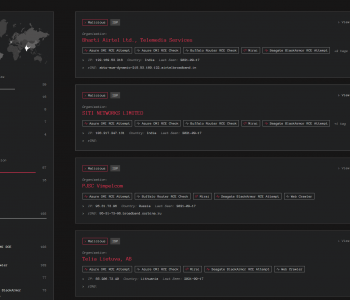
CVE-2021-38647 – Open Management Infrastructure (OMI) RCE – Linux…

Situation

Ok so the situation is as per usual a bit fluid, when this first dropped I was looking at this with a “azure” lense, however as time goes on it appears this likely also covers any Linux distro with the Azure/SCOM/OMS agents installed. This may change the profile of risk considerable, not only from a public facing attack surafce but highly likely from a lateral movement persspective. I’m going to keep updating this as more intel comes in. (sorry I’d be clearer if I had a clearer picture myself)

This week 4 vulnerabilities were disclosed which affect Azure virtual machines running the Open Management Infrastructure (OMI) agent (think PowerShell remoting). As above the scope seems to be slightly wider with regard to SCOM/AZURE and OMS/Sentinel etc. agents for Linux (I want to confirm all of this but for now it seems this is the position)

Essentially these vulnerabilities allow for both network-based remove code execution (RCE) and local privilege escalation (LPE).

  • There is evidence of exploitation in honeypots.
  • There is a public proof of concept available for the RCE.
  • The internet facing attack surface from a global perspective seems low based on the data in Shodan and Censys however I’m not convinced this is currently giving a clear picture.
    • So, check your azure networks, Vms and firewalls would be a sensible idea

Read more “CVE-2021-38647 – Open Management Infrastructure (OMI) RCE – Linux hosts”

Defense

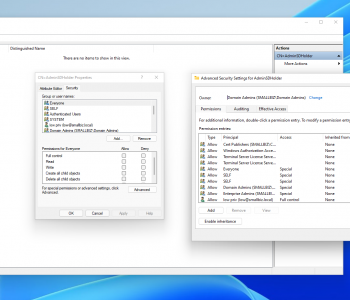
Post Compromise Active Directory Checklist

Nuke it from orbit, it’s the only way to be sure!

Ok, in an ideal world you can re-deploy your entire environment from scratch, but back in the most people’s real world’s that’s not that simple. So, what do we do if we can’t nuke from orbit in a post compromise situation? Well, we need to clean up! This isn’t an exhaustive list, not a total guide. it’s a quick list to make you think about some key common areas and actions that might need to be taken! after all if someone got r00t, who knows what they did! (trust me, most orgs monitoring is a bit naff!)

Read more “Post Compromise Active Directory Checklist”
Guides

What if not everyone is a cyber expert?

Developing a Cyber Roadmap

Ok so this topic comes up a fair bit, but organisations and their management are often looking to ensure they are doing the right thing (no really this is a common phrase I hear with organisations) with regard to cyber security. THe challenge I think quite a few people have is even understanding what that even means. Sure you have a firewall, and antivirus and you had a yearly peneration test of a site that isn’t even touching your corproate network. You thought you were fine, but you keep seeing organisations get ransomared in the news and the board keep asking “are we ok?” so this then leads to a common position of maybe buying more widgets or thinking, well we haven’t been “hacked” so we must be doing ok.

Read more “What if not everyone is a cyber expert?”
CTF

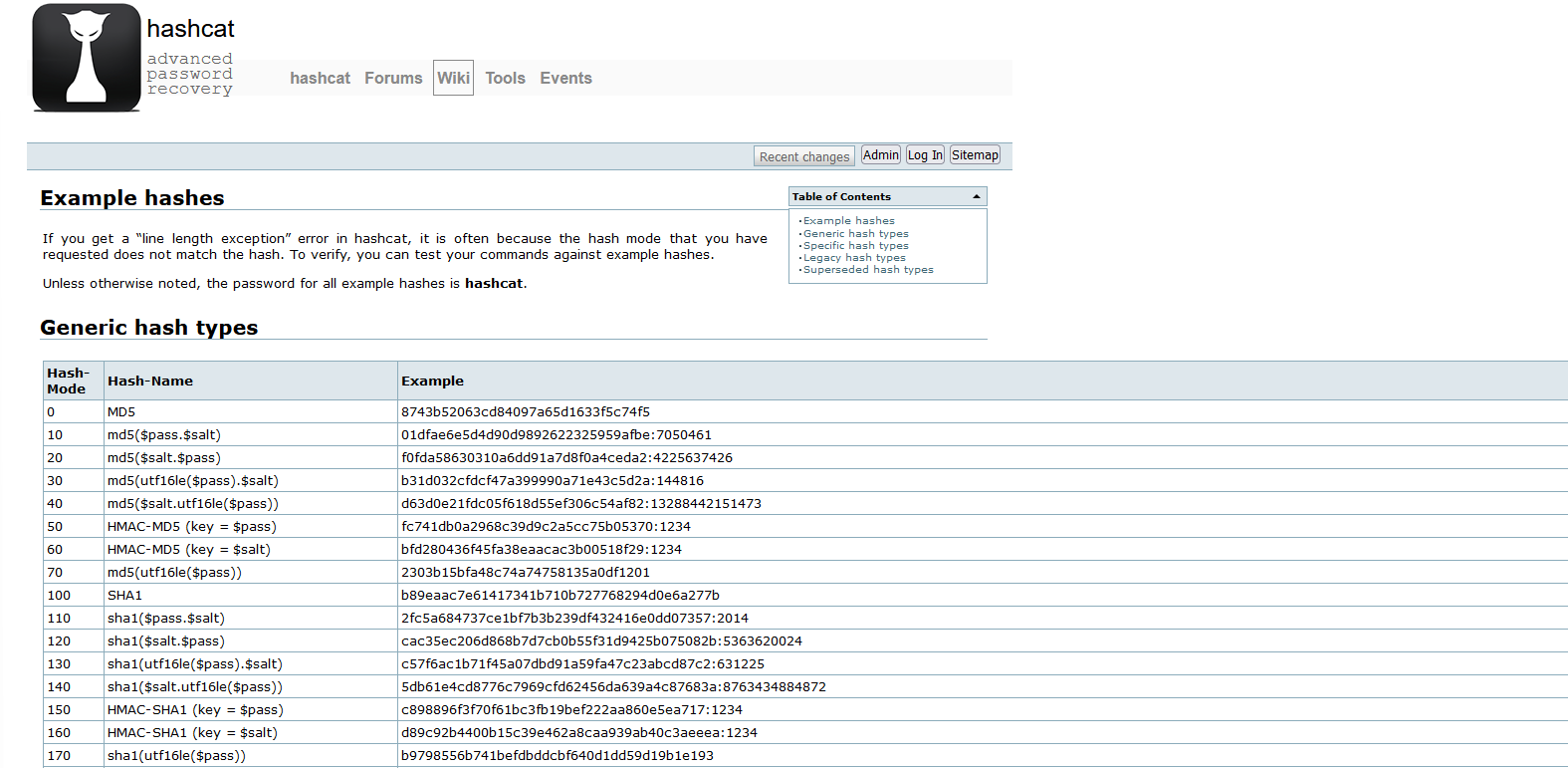
How to Identify Hashes

Some hashes are obvious but even then, it’s a good job to check. There are a few ways to check a hash outside of manual validation.

Using the Hashcat example list:

https://hashcat.net/wiki/doku.php?id=example_hashes

Graphical user interface, text, application, email

Description automatically generated

Using hash-identifier:

https://github.com/blackploit/hash-identifier

Using cyberchef Analyse hash:

https://gchq.github.io/CyberChef/#recipe=Analyse_hash()

Background pattern

Description automatically generated with low confidence

Using hash-id:

https://github.com/psypanda/hashID

Using HashTag:

https://github.com/SmeegeSec/HashTag

As you can see there are range of tools available to you, and remember if you want to keep the hashes to yourself you can download Cyberchef and run it locally!

Image Defense

Infection Monkey Overview

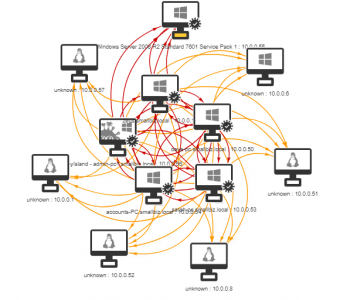
Have you ever wanted to see what would occur in an environment if a worm was a make its way in? I often work with customers to show them about lateral movement from a human operated perspective however sometimes it’s useful for people to visualise this better and to demonstrate what could occur if a worm was set loose. A great tool to help with this is Infection Monkey from Guardicore (https://www.guardicore.com/

High Level View

The process steps are as follows:

  • Scope Exercise
  • Prepare Environment
  • Deploy Infection Monkey Server (Monkey Island)
    • Configure Server Credentials
  • Monkey Configuration
  • Release Monkey/s
  • Review
  • Report

Read more “Infection Monkey Overview”