Architecture

The difference between what can be vs what often…

I’ve travelled all over the internet, I’ve worked with logs of organisations from banks through to small ISVs and one thing I would say is fairly universally true. What can be isn’t what is.

There’s a lot of different operating models and technologies in the world. There’s logs of differen’t specifics. This diagram here is not mean’t as a refrence architecture but more as an indicator.

There is also a massive reality people must understand, cyber good most definatley costs more at the point of deployment than cyber bad. Cyber bad’s ROI is truly variable and in mind mind is too hard to measure. For one org with cyber bad can experiance a significant breach (and cost) and another may have lady luck on their side.

Read more “The difference between what can be vs what often is – Cyber Architecture”
Log4Shell Defense

Log4Shell exploitation and hunting on VMware Horizon (CVE-2021-44228)

TLDR

Go and run this on the connection servers:

https://github.com/mr-r3b00t/CVE-2021-44228

It’s crude so also look for the modified timestamps, recent unexpected blast service restarts and if you have process logging go and check for suspicious child processes over the period. Once you have checked, run a backup, then if they aren’t patched, patch the servers! (i know patching isn’t as simple as just patch!)

Read more “Log4Shell exploitation and hunting on VMware Horizon (CVE-2021-44228)”
Leadership

The Security Challenges of 2021

The gaps between strategic security improvement and keeping the wolves out, today!

The Cyber Realities in 2021

Most organisations today honestly don’t have great cyber security postures. Cyber security has improved since the 80’s and 90s’s but still common gaps can be found in the same old areas.

So, whilst security possibilities and technical capabilities for defence have greatly improved, this hasn’t really translated into the level of change we would like to see on the ground inside organisations.

I’m writing this post after giving a talk today about the challenges I see in cyber security across different organisations but also after watching a talk by Dave Kennedy which from my perspective emulates my experiences and largely my views. Read more “The Security Challenges of 2021”

Defense

Phishing your own people – path to eroding trust…

Introduction

“Security education and awareness darling, it’s all the rage! It’s simply to hot right now.” Ok stop, let’s take a minute to get some context. It’s the year 2021, organisations are taking a battering round the globe from cyber criminals who are deploying ransomware, extortion, and fraud via a range of methods but one you can’t not have heard of is phishing.

In this post today, I’m going to look at realities of initial access, phishing and some questions I think people should be asking themselves about the idea of phishing their own userbase. I try and look at this from multiple perspectives because I think it’s a complex subject. Let’s start with initial access methods!

Common Patterns of Access

If we look at the world of technology and cyber security, you will see logs of references to frameworks and language that is enough to send even the committed to sleep! However, let’s abstract from our TTPs, our MITRE ATT&CK frameworks and our “threat actors” and let’s talk in normal English. Read more “Phishing your own people – path to eroding trust or a useful tool?”

Defense

HID Attacks using OMG Cables

Human Interface Devices is the science way of saying (in this case) keyboard! Now that doesn’t sound amazing but then we look at the details. What we are talking about here is a wireless remote controlled programable keyboard emulator disguised as a USB cable or a cable between a real USB keyboard (must be detachable). This provides attack opportunities to both key log and hijack inputs to PC devices covertly and remotely (within WIFI range). Just imagine what you could do with one of these.

Read more “HID Attacks using OMG Cables”

Defense

Password Auditing with L0phtcrack 7 – A quick intro

If you know me that one of the first things, I recommend organisations do is conduct password audits against active directory on a regular basis. There are a ton of ways to do this and depending upon size of directory and budget you will likely want to do this with more than a CPU however the process remains the same. So, with the news that a new release of L0phtcrack (open source) is online let’s take a look at how we can deploy and start cracking those hashes! This isn’t an end to end guide to cracking with l0phtcrack – but it does show the install process and provide considerations for your cracking adventures. Remember, only do this where you have authorisation. Read more “Password Auditing with L0phtcrack 7 – A quick intro”

Guides

Linux 101 for Windows People

Introduction

I come from a heavy Windows background, in fact I started my computer experience on an Amstrad however not long after I was using DOS and then Windows 3.11 for Workgroups. So, I’m a heavy Windows head, I’ve deployed all kinds of services and applications within business environments using common technologies such as:

  • CISCO/DELL/HP Networking switches and routers
  • ISA/TMG/UAG/Checkpoint firewalls
  • Palo Alto Firewalls
  • Microsoft Windows Client (Windows 3.11-Windows 11)
  • Microsoft Windows Server (NT4 – Windows Server 2022)
  • Vmware vSphere/ESXi
  • Random Linux Security appliances and VPN devices

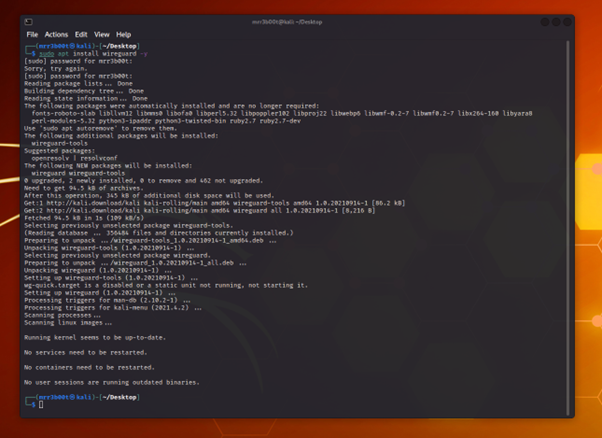
One thing that I’ve noticed in my travels so far is that Linux deployments in enterprise environments in the back office/corp nets are often appliance based or “black boxes”. This creates a bit of a fun scenario whereby some system administrators and operations teams aren’t particularly comfortable with using UNIX/Linus systems. So, I thought I’d try and write some content to show how to do common tasks using the command line interface (CLI). This isn’t designed as an indepth guide, this is really just to try and give people a view of some of the things that you will need to be aware of. This isn’t mean’t to be “academic” or replace manuals and technical docs so it’s brief and to the point (as far as that is possible). Read more “Linux 101 for Windows People”

Defense

Creating a honeypot for CVE-2021-41773 (Path Traversal and RCE)

A path traversal vulnerability and exploit just dropped in the wild for a specific version of Apache (Apache/2.4.49). This vulnerability allows an unauthenticated attacker to execute a path traversal attack (and now shown RCE if MOD_CGI is enabled) to read files outside of the virtual directory path bounds. This only affects a single version of Apache, there’s a fair few of these online, however it’s very unlikely all are vulnerable. The vulnerability requires specific permissions to be configured.

A screenshot of a video game

Description automatically generated with medium confidence

Read more “Creating a honeypot for CVE-2021-41773 (Path Traversal and RCE)”