Defense

Audit NTDS.DIT using DSINTERNALS

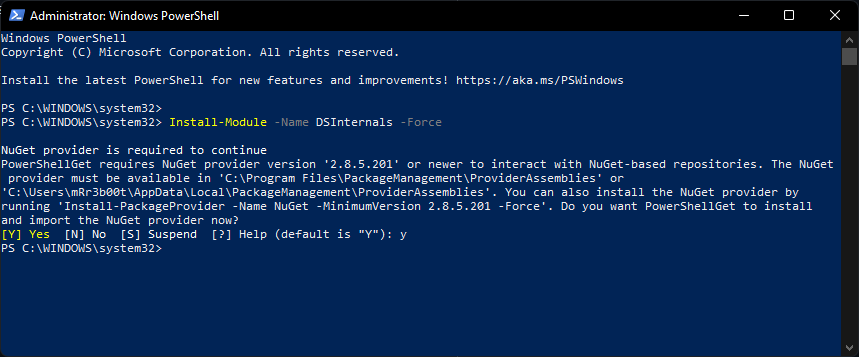
Ok this assumes you know how to get the NTDS.DIT and SYSTEM registry hive out from a domain controller, if you don’t go looking, we might have blogged a few ways to do that! Now then, firstly, let’s Install DSInternals. From PowerShell 5 onwards you can simply run:

Install-Module -Name DSInternals -Force

Text

Description automatically generated

You will likely need to set your execution policy:

Set-ExecutionPolicy -ExecutionPolicy Unrestricted

Now to dump the hashes we use: Read more “Audit NTDS.DIT using DSINTERNALS”

Defense

Dumping Credentails with MIMIKATZ and Passing the Hash (PTH)

I kid you not, I forget the commands, so I thought, hey let’s write a small blog post on credential dumping and pass the hash.

To achieve this we need: Debug privileges on a single machine or we need access to a disk that does not have full disk encryption. We also need the password to be re-used.

Mimikatz

Ok for this demo I’m going to run with the out of the box release for Mimikatz on a domain joined windows PC with Defender disabled.

To gain system we launch mimikatz from an admin shell and run:

privilege::debug

token::elevate

Now we are SYSTEM we access a range of high privilege level areas. Read more “Dumping Credentails with MIMIKATZ and Passing the Hash (PTH)”

Defense

Hacking Guide – AESREPRoast and Kerberoasting

Kerberos Pre-Authentication Hash Retrieval and Cracking

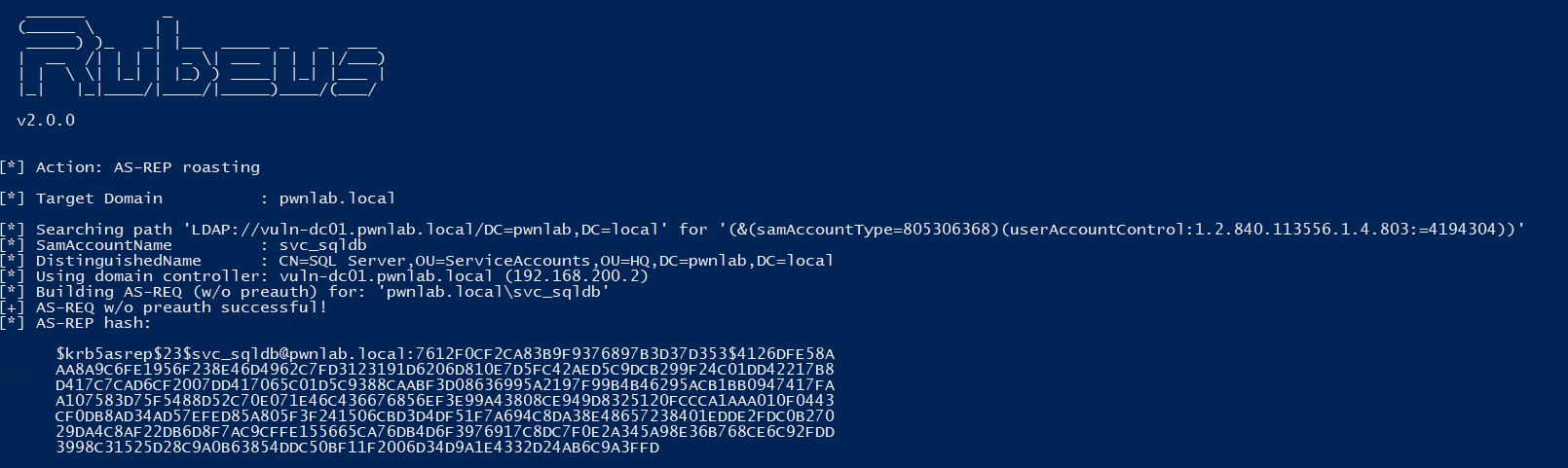
We can enumerate active directory to find accounts that do not require pre-authentication. There’s a simple way of doing this using Rubeus:

.\Rubeus.exe asreproast /format:hashcat

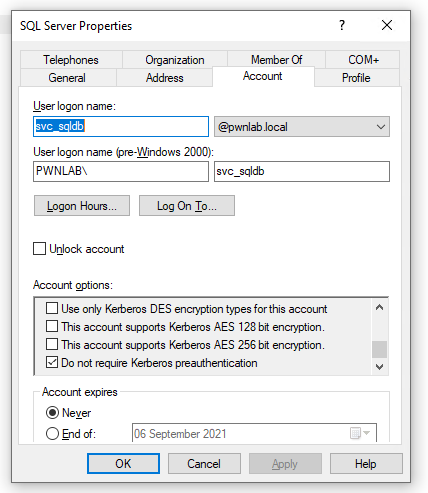
We can see there is a vulnerable account that has Kerberos Pre-Authentication disabled.

This hash can be loaded into hashcat and possibly cracked (the hash in the screenshot is weak on purpose) Read more “Hacking Guide – AESREPRoast and Kerberoasting”

PetitPotam Guides

From Zero to DA using ‘PetitPotam’

Introduction

Whilst I was on ‘holiday’ (seriously even when on holiday I almost always must do some work!) a few Windows vulnerabilities were published. Great work by Gilles Lionel, Benjamin Delpy and many many others!

Lab Setup

  • A Domain Controller
  • A Separate ADCS Install with Web Enrolment or two DCs one with ADCS installed.
  • A windows Client Device (non-domain joined)
  • An attacker device (I used Kali)

You do not need any domain credentials to conduct this exploit chain, so from a network adjacent unauthenticated position you can get DA with the right circumstances (default configuration). Read more “From Zero to DA using ‘PetitPotam’”

CTF

mRr3b00t Learns to play HTB again!

I rarely get a chance to play HTB these days 🙁 but today I thought i’d get back on it.. then I had a three hour battle with a graphics driver and Vmware Workstation so that basically ruined that idea…. but I thouht I’d try and remember how to CTF again.. and boy do you get slow fast! Well to try and help people and myself I’ve started to write down some notes to get my mind back into the CTF world of HTB!

Setup & Scope

Ok this is the setup phase. Let’s grab the details

  • Take note of the machine name
    • Remember most boxes are called .htb or .htb.local
    • There’s not an “internet” dns inside the arena so you need to update hosts files
  • Take note of the box author
    • This is useful for OSINT
  • Take note of the IP
    • This is your scope
  • Take note of the OS version
  • Get you digital notebook ready
Read more “mRr3b00t Learns to play HTB again!”
Defense

Threat Modelling 101

What is a threat?

https://csrc.nist.gov/glossary/term/threat

According to those clever people at NIST it is:

“Any circumstance or event with the potential to adversely impact organizational operations (including mission, functions, image, or reputation), organizational assets, or individuals through an information system via unauthorized access, destruction, disclosure, modification of information, and/or denial of service. Also, the potential for a threat-source to successfully exploit a particular information system vulnerability.” Read more “Threat Modelling 101”

Guides

Hacking 101

Back in 2019 I started to make some materials to help people with some basic offensive security techniques. I made three eppisodes of training materials. Well I’ve decided to re-release these, they haven’t really been changed but I’ve updated a few graphics on episode 3 and removed a link to Cain and Abel because it’s no longer maintained. I will probably go through these at some point and re-factor them.

I’ve got more documents on active directory security, I’ve actually written hundreds of pages on the subject but the challenge I’ve had is there is just so much to write, so I’ve decided I’m going to chunk it up into small blogs on a specific technique or area.

Read more “Hacking 101”
CTF

Try Hack Me: Part 5 – Game Zone

Getting my agent on!

Today we look at a vulnerable web application room based upon the Hitman series!

https://tryhackme.com/room/gamezone

This is a fun room where we see an old but common vulnerability in untrusted user input lead to sensitive information disclosure (hashed credentials) which results in a threat actor gaining initial access. From here we then discover there is a weak security configuration (in effective network segmentation) and a vulnerable unpatched service. This chain leads to total system compromise. Read more “Try Hack Me: Part 5 – Game Zone”