Leadership

DNSSEC

‘You are totally compromised!’ because you don’t have DNSSEC configured on domain…..

The implication is that you’re one packet away from catastrophe. It’s alarming. It’s also, for the overwhelming majority of organisations, not true. I have been talking about this for years and years!

Here’s the quickest way to see through it. I scanned the Majestic Million – the top one million domains on the internet – for DNSSEC. About 6.75% were signed (around 8.2% if you only count domains that actually resolve). The .com zone, which is half the list, sits at 4.6%. And the unsigned set includes google.com, amazon.com and microsoft.com.

So if “no DNSSEC” means “totally compromised,” then the three most-attacked, best-defended companies on the planet are totally compromised, and have been for years, on purpose. They aren’t. The finding is measuring conformance to a checklist, not risk. Let’s understand why this is!

Read more “DNSSEC”
AI

When AI goes wrong…

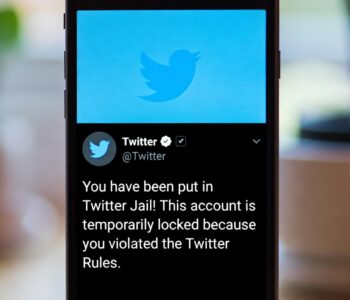
Ok so as I’m writing this I’m currently on a temporary ban from twitter…. the reasons for this I believe are more complex than one would expect. Full disclosure, I’m assuming the ban was in part due to AI but that is an assumption… but it’s the only realistic explanation I have. You might be thinking, who cares…. but bear with me….

Read more “When AI goes wrong…”
AI

one step closer to Skynet?

Yesterday I ran a pentest against an RDP server, the process was ok but not amazing, I had to provide more help than I would have liked, resource consumption and the idea it should keep going…. wasn’t great. The process and output wasn’t terrible at all but it didn’t blow me away.

So today I wanted to see if Claude could take on as simple active directory lab! Now let’s be clear, there were I think one or two updates to the Claude client in that time! The Claude UI even changed look and feel! So I span up an AD lab I had made a while ago and got to work!

Read more “one step closer to Skynet?”
Threat Intel

Administrator:password

Imagine this, you setup a server and it has a really weak administrator password! Now let’s imagine you expose RDP to the internet. How long would it take to get pw3nd?

Well we did this, using a custom configuration to make this safe, we setup a Windows Server, setup an administrator account with the password of ‘password’ and monitored the logs! So let’s see what we found.

Read more “Administrator:password”
Threat Intel

FortiSIEM CVE-2025-64155 Exploitation Analysis

‘An improper neutralization of special elements used in an OS command (‘OS Command Injection’) vulnerability [CWE-78] in FortiSIEM may allow an unauthenticated attacker to execute unauthorized code or commands via crafted TCP requests.’

https://www.fortiguard.com/psirt/FG-IR-25-772

This analysis was conducted using data from Defused, enrichment from IPINFO and SHODAN and then analysis using an LLM (GROK) (so take the analysis with a pinch of salt):

Read more “FortiSIEM CVE-2025-64155 Exploitation Analysis”
Threat Intel

SMSBlasters Historic Incidents

Whilst some people go on about DNSSEC, PUBLIC WIFI and JUICE JACKING they seem to be missing out on a threat that is real, active and has seen increased adoption by threat actors. SMS BLASTING!

Sounds cool, but basically it’s an ISMSI Catcher/Fake CELL network that is broadcasted between 500m and 2Km that lets an attacker send SPOOFED SMS messages to any cell that connects. This can be used for scams, phishing etc.

Read more “SMSBlasters Historic Incidents”
Education

All your DNSSEC base are belong to us

DNSSEC (Domain Name System Security Extensions) has been around since the mid-2000s and technically works well: it cryptographically signs DNS records so resolvers can verify that the answer they got really came from the authoritative server and wasn’t tampered with. Despite that, adoption and real-world deployment remain surprisingly low outside a few countries (notably .se, .nl, .cz and some others). Here’s why it never took off broadly, and why the rise of DNS over HTTPS (DoH) has made many people conclude that pushing DNSSEC further isn’t worth the effort anymore.

Read more “All your DNSSEC base are belong to us”
Threat Intel

Fortiweb – CVE-2025-58034

‘CVE-2025-58034 is an OS command injection vulnerability (CWE-78) in Fortinet FortiWeb, allowing an authenticated attacker to execute unauthorized code on the system through crafted HTTP requests or CLI commands. It affects versions including FortiWeb 8.0.0-8.0.1, 7.6.0-7.6.5, 7.4.0-7.4.10, 7.2.0-7.2.11, and 7.0.0-7.0.11. The vulnerability has a CVSSv3 score of 6.7 (medium severity) and has been observed exploited in the wild, prompting its addition to CISA’s Known Exploited Vulnerabilities catalog.’

Read more “Fortiweb – CVE-2025-58034”